


What Exactly is a “Bridge Course”?
Let’s keep it simple. A bridge course is a preparatory class, usually lasting 6 to 10 weeks. As the name suggests, it is designed to “bridge the gap” between what you learned in Grade 10 and the advanced syllabus you will face in Grade 11.
The curriculum usually changes depending on what you want to study:
- Science Stream: It shifts focus from memorizing definitions (rote learning) to deep conceptual understanding in Physics, Chemistry, Biology, and Math.
- Management Stream: It introduces you to completely new languages of business like Accountancy, Economics, and Business Studies, subjects you likely haven’t touched before.
The Big Debate: Is it Really Necessary?
Here is the short answer: No, it is not mandatory.
There is no government rule saying you cannot get admissions into Grade 11 without a bridge course certificate. However, just because it isn’t mandatory doesn’t mean it isn’t useful.
The long answer depends entirely on your personal goals:
- If you are aiming for top-tier colleges: Many prestigious colleges in Kathmandu hold highly competitive entrance exams. A bridge course after SEE can give you the edge you need to crack those tests.
- If you are switching strengths: Did you struggle with Math in school but want to take Science? Or perhaps you want to crush it in Management? Then yes, you need the extra foundation.
If you want a relaxed local college: If your target college doesn’t have a difficult entrance exam, you might not strictly need it.
Advantages: Why Students Choose Bridge Courses
So, why do thousands of students flock to these centers every year?
- Scholarship Opportunities: This is the biggest factor. Most top +2 colleges in Nepal offer full or partial scholarships based on the marks you score in their Entrance Exam, not just your SEE GPA. A bridge course helps you score higher, potentially saving your money in tuition fees later.
- Gap Filling: The jump in difficulty from Class 10 to Class 11 (especially in Science) is massive. A gap-filler program softens this blow so you don’t feel completely lost during your first month of college.
- Study Habits: A 3-month holiday is great, but it often makes students “rusty.” A light course keeps your brain active so you don’t forget how to study.
- Social Networking: It’s a great way to meet friends from different schools who have similar ambitions as you.
The Flip Side: Why You Might NOT Need It
We believe in honesty. Not everyone needs to sit in a classroom right now.
- Financial Constraint: These courses cost money. If budget is an issue, remember that resources like YouTube and Khan Academy are completely free. Self-study is a valid path!
- Burnout: You just finished a stressful exam. Some students genuinely need a mental break. If you are exhausted, forcing yourself to study might do more harm than good.
- Alternative Skills: Maybe you want to use this time to learn other foundational courses like Graphic Design, Coding, or Public Speaking. Sometimes, these life skills are more valuable than re-learning Physics formulas.
Career Counseling: The Step Before The Course
Before you rush to pay fees for a bridge course, stop.
The biggest mistake students make is joining a Science bridge course just because their best friend did, only to realize two months later that they actually hate Science.
This is where career counseling becomes critical after SEE.
You need to understand your aptitude first. Stream selection after SEE shouldn’t be a guess; it should be an informed decision. Are you a creative thinker? A logical problem solver? A future entrepreneur?
Choosing subjects after SEE is a decision that shapes your next two years, and your career. Don’t skip the counseling step.
How Reliance International Academy (RIA) Can Help
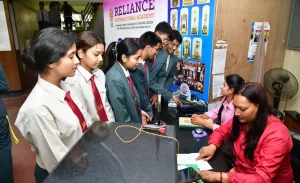
At Reliance International Academy (RIA), we believe we are more than just a college; we are mentors for your journey.
We know this time is confusing. That is why RIA +2 offers support before you even apply.
We offer Free Counseling for students and parents.
- Confused between Management or Science?
- Not sure if your GPA is enough for your dream subject?
- Parents worried about the cost of +2 education?
You don’t have to figure this out alone. Come visit Reliance college +2. Our experts will sit down with you, look at your grades and interests, and help you map out a future that fits YOU. This is a no-obligation service, we want to help you, whether you join us or not.
Why choose Reliance +2?
- Generous scholarship schemes for deserving students.
- An excellent track record in NEB Board Results.
- A focus on Holistic Development (combining ECAs with Academics).
Conclusion: Your Next Steps
Ultimately, a bridge course after SEE is a tool, not a rule. Use it if it aligns with your goals of getting scholarships or entering competitive colleges. Skip it if you have a different plan for your break.
Whatever you do, don’t panic. Enjoy your break, but stay curious.
Still have questions? Don’t guess with your future.
Visit Reliance International Academy (RIA) today for a chat with our experts. Let’s build your future together.
Frequently Asked Questions
1. Why should I study a Bridge Course after SEE?
The “iron gate” of SEE is behind you, but the jump to +2 is surprisingly steep. A bridge course helps you:
- Close the Gap: It introduces advanced concepts in Science, Math, and English that aren’t covered in Class 10 but are essential for Class 11.
- Entrance Success: Top-tier colleges have highly competitive entrance exams. These courses provide the specific “tricks” and speed needed to ace them.
- Scholarship Opportunities: High scores in entrance exams often lead to significant scholarships, saving you money in tuition fees later.
2. Are bridge courses offered in online or offline mode?
Both.
Offline: Traditional classroom settings in institutes offer peer interaction and face-to-face mentorship.
Online: There are platforms that allow you to study from home. This is a great, cost-effective option for students living outside Kathmandu or those who prefer a flexible schedule.
3. Is a bridge course free? What are the fees?
Generally, no, bridge courses are not free, though some scholarship schemes exist.
4. Is it only important for students pursuing Science?
Definitely not! While Science students use it to tackle Physics and Chemistry, Management and Humanities students benefit from:
- Foundation classes in Accountancy and Economics.
- Strengthening Business Math and English communication skills.
- Preparing for specialized entrance exams in top management colleges.
5. After the intense pressure of the SEE, is it better to prioritize relaxation and mental recovery before starting the next academic phase?
You absolutely deserve a break! However, the “post-SEE gap” is usually 3 months long. While the first 2–3 weeks should be for pure rest, total inactivity for 3 months can make your brain “rusty.”
6. Will enrolling in an extra course now lead to burnout, considering the heavy workload I’ll face once the actual +2 session begins?
Think of it as a “warm-up” rather than extra work. Students who take bridge courses often find the first few months of Grade 11 easier because they’ve already seen the material. It actually reduces stress in the long run.
7. Is a bridge course compulsory in Nepal?
No. It is entirely optional. You can get into many colleges based solely on your SEE GPA and a basic entrance test. However, it is popular because of the competitive nature of scholarships and top-ranking institutions.
8. When does it start and how long is it?
- Start Date: Most institutes start batches within one week after the SEE ends.
- Duration: Typically 8 to 12 weeks (ending just before college admissions begin).
9. Should “Average” students join?
They Should. Average students can use bridge courses to build the confidence they might have lacked in school. It’s a fresh start where you can learn at a different pace without the pressure of board exams.
10. Does Reliance International Academy (RIA) offer a Bridge Course?
No, Reliance College doesn’t provide bridge courses. However, We provide students and parents with free counseling to help them with their studies and secure a future-proof career.
11. What are the counseling hours of RIA?
You can visit us for guidance during these hours:
- 7:00 AM – 4:00 PM (Sunday to Friday)